The best sit-down games are not about winning quickly or remembering every rule. They create an easy reason to gather around a table, notice something together and share a laugh. In a care home, community group or family living room, a well-chosen game can also make it easier for someone to join in for five minutes or stay for an hour.
When planning, start with the person and the group. What feels familiar? Would people rather chat, make something, solve a puzzle or listen to music? The NHS encourages people living with dementia to continue activities they enjoy and includes games, puzzles, social groups, creative activities and reminiscence among the possibilities.
A welcoming game has more than one way to take part. Someone can choose a card, offer an idea, watch, keep company or simply enjoy the atmosphere.
What makes a sit-down game work well?
Look for activities with clear materials, a calm pace and room to adapt. Large, easy-to-hold pieces, good contrast and a short explanation can all help. Keep the table uncluttered and avoid turning every game into a test of memory or speed.
Groups do not need to play in exactly the same way. A quiz can become a conversation. A jigsaw can become a shared project. A card prompt can be read aloud by one person and discussed by everyone else. The aim is enjoyment and connection, not perfect play.
15 sit-down game ideas for older adults
1. A shared large-piece jigsaw
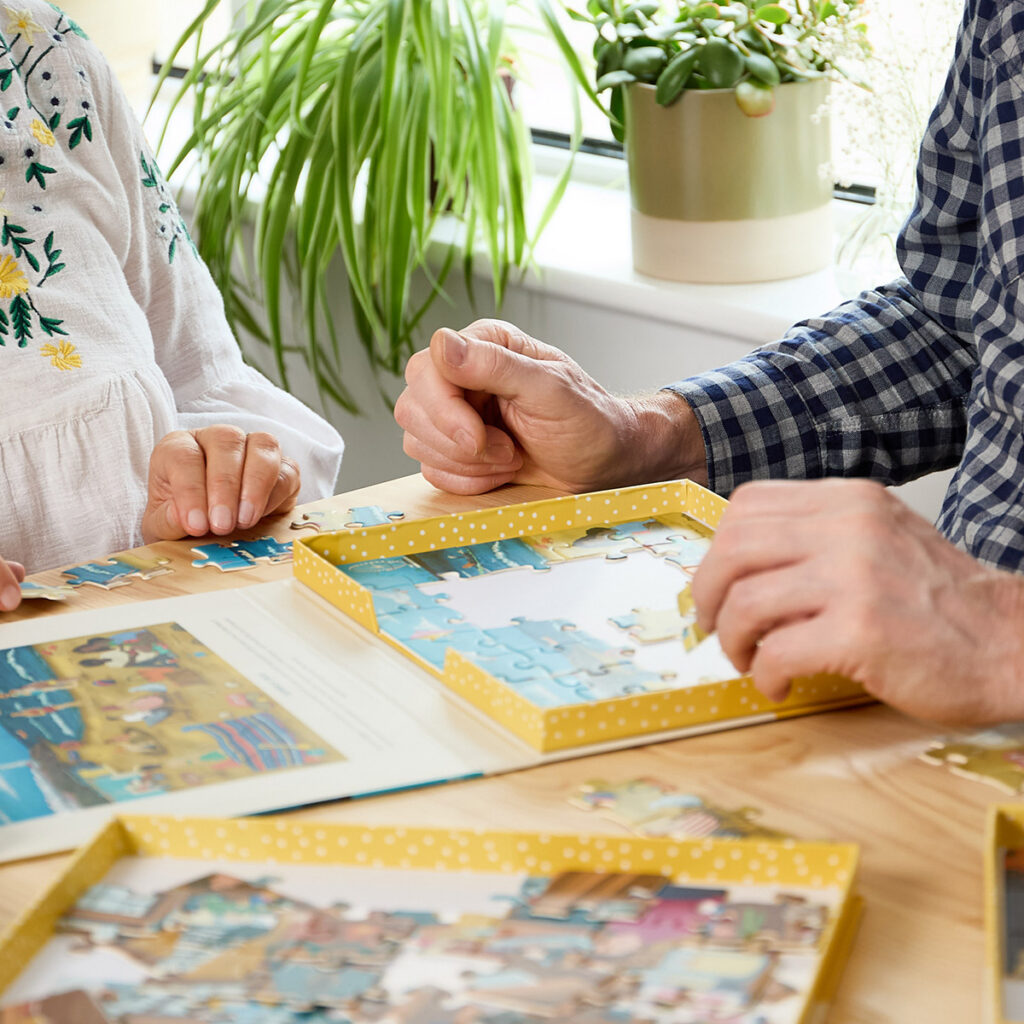
Leave a puzzle on a table and invite people to add a piece when they wish. It works well because there is no pressure to take turns or finish in one sitting. A clear image and larger pieces can make the table more inviting. See A Good Day’s dementia jigsaw puzzles for shared puzzle options.
2. Picture bingo
Replace numbers with large, familiar pictures: teacups, dogs, buses, flowers or everyday foods. Call out the pictures slowly and let people mark their cards in whatever way works for them.
3. This-or-that choices
Create cards with two pleasant options: tea or coffee, seaside or countryside, roast dinner or fish and chips. The point is the conversation that follows, not recording a right answer.
4. Name-that-tune
Play a short clip of a familiar song and invite the group to name it, hum along or talk about where they first heard it. Keep it light: the music can be enjoyed whether or not anyone names the title.
5. A table-top quiz with visual clues
Use a photo, object or printed word as the clue. Keep questions simple and give people time to respond. A host can offer two choices if an open question feels too difficult.
6. Postcard storytelling
Lay out a small set of postcards. Invite everyone to choose one and say what they notice, where it might be or what they would pack for the trip. Imagined stories are just as welcome as personal memories.
7. Domino picture matching
Use cards with matching colours, shapes or images instead of small, numbered dominoes. This can be played cooperatively, with the group finding where each card belongs.
8. Familiar-object sorting
Choose a gentle theme, such as kitchen items, gardening tools or sewing materials, and ask the group to sort pictures or safe objects into pairs. This can lead naturally into stories about everyday routines and hobbies.
9. A conversation-card circle
Put a stack of easy prompts in the middle of the table. One person can read the card aloud, pass it to someone else or simply choose a topic. A Good Day’s activities and games can help inspire a relaxed conversation table.
10. Collaborative colouring
Choose a single large picture or several small sheets. Some people may colour, while others choose colours, talk or enjoy watching. There is no need to display the result unless the group wants to.
11. What belongs together?
Use pairs such as cup and saucer, glove and scarf, or seed and flower. The game can be as simple as matching pictures or as open as discussing why the items belong together.
12. Word association with a theme
Choose a gentle topic such as gardens, holidays, films or favourite foods. Say one word and invite people to offer another. A facilitator can write contributions in large letters so the group sees the growing list.
13. A group playlist vote
Offer two or three song choices and let the table decide what to play next. Encourage comments about the sound, rhythm or memories the music brings, without expecting anyone to recall details.
14. Simple board games with adapted rules
Many classic board games can be shortened. Play for a fixed number of turns, work in pairs or remove complicated scoring. Explain one step at a time and keep the option to pause.
15. A monthly celebration table
Build a game around the month: a spring picture match, a summer holiday quiz, an autumn object table or a winter song choice. Familiar seasonal cues can make it easier to plan a regular activity session.
Ways to include everyone at the table
Start by giving people a clear invitation and enough time. A busy room can make it harder to follow a game, so reduce background noise where possible and keep directions short. Dementia UK advises using simple, straightforward language, listening carefully and allowing plenty of time for someone to answer.
Offer an alternative role before someone needs to ask for one. They might be the card picker, music chooser, puzzle sorter or conversation starter. If someone would rather watch, that is participation too.
A simple 45-minute group plan
Begin with ten minutes of tea and an object or postcard table. Move into one main activity for around twenty minutes, with a clear option to pause or change course. Finish with a ten-minute shared music choice or a light conversation prompt. Keep the last five minutes for a calm close and practical reminders.
For care and community settings, it can help to keep a small collection of adaptable materials together, so the activity does not rely on a new purchase or complex preparation each week. Explore Care Home Activity Packs for ready-to-share activity resources.
The game is only the beginning
The game may be a jigsaw, a photograph or a simple choice card. What matters most is the time around it: people being welcomed, included and given space to contribute in their own way. A good sit-down game makes that easier.
Explore shared activities and games
For more ways to build a relaxed activity table, explore A Good Day’s dementia-friendly activities and games. The category brings together practical shared activities for a range of interests, settings and group sizes.