Sometimes the hardest part of a conversation is knowing how to begin. A familiar object, a piece of music, a picture or a simple shared choice can make the first few moments feel easier. The goal is not to test anyone’s memory or keep a chat going at all costs. It is to create a comfortable opening for connection.
People living with dementia may find conversations easier at some times than others, and a quieter setting can help. Dementia UK recommends reducing distractions, speaking clearly, listening with empathy and allowing plenty of time for a response. Those small changes can make a difference before a question is even asked.
The most helpful conversation starter is often an invitation to share, not a request to remember.
Begin with the setting, not a question
Before reaching for a prompt, take a moment to make the space more comfortable. Sit where you can see each other, turn down competing noise if possible and focus on one conversation at a time. Say the person’s name, smile and allow the conversation to move slowly.
If a question feels like too much, make an observation instead. “The sun is lovely today” or “This song has a gentle rhythm” can leave room for a response without placing anyone on the spot.
20 gentle conversation starters
Start with everyday preferences
- “Would you prefer tea or coffee just now?”
- “Shall we sit by the window or at the table?”
- “Would you like to listen to music or look at these pictures?”
- “Which colour catches your eye today?”
Two clear choices can be easier to respond to than a wide-open question. If neither option suits, that is useful information too.
Use what is already around you
- “This flower has such a bright colour. What do you notice about it?”
- “I can hear the birds outside. Shall we listen for a moment?”
- “This picture has a lot happening in it. What stands out first?”
- “This cup has a lovely pattern. Would you choose one like it?”
Objects, photographs and surroundings provide a shared focus. That can make a conversation feel less direct and more natural.
Invite stories without requiring exact recall
- “This reminds me of summer. What does it make you think of?”
- “There is a garden in this picture. What would you enjoy growing?”
- “That song sounds familiar. How does it make you feel?”
- “This recipe looks comforting. What flavours do you enjoy?”
- “If we were having a picnic, what would you like to bring?”
These invitations do not depend on getting a fact right. A person might share a detailed story, a feeling, one word or no words at all.
Let a shared activity do some of the talking
- “Shall we find a piece that has some blue in it?”
- “Would you like to choose the next colour?”
- “Which card would you like to look at first?”
- “Can we put these two pictures together?”
- “Would you like to listen to one more song?”
A shared jigsaw, colouring sheet or set of cards can offer natural pauses. Explore dementia-friendly activities and games for ideas that put something friendly on the table between two people.
Make space for the person’s interests
- “I remember you enjoy gardening. Would you like to look at these flower pictures?”
- “You have always had an eye for colour. Which of these feels most like you?”
Use what you genuinely know about the person, but do not insist on a response. A prompt can be changed, set aside or revisited another day.
Conversation habits that can help
Keep sentences short and clear. Give the person time to respond before filling the silence. Dementia UK suggests avoiding too many choices and being specific where possible, rather than relying heavily on pronouns such as “he” or “she”.
It can also help to respond to the feeling behind what someone says. You do not need to correct every detail. If a person is telling a story, show you are listening through eye contact, a smile, a nod or a gentle follow-up based on their words.
When the conversation does not flow
Silence is not a failure. It may be a comfortable pause, a sign that the person is concentrating or a cue to change the activity. You might put on music, make a drink, look through a photo album or simply sit together for a while.
If someone becomes more confused than usual or you are worried about a sudden change in communication, seek appropriate health advice. This article offers everyday conversation ideas and is not a substitute for professional support.
Using games and prompts with care
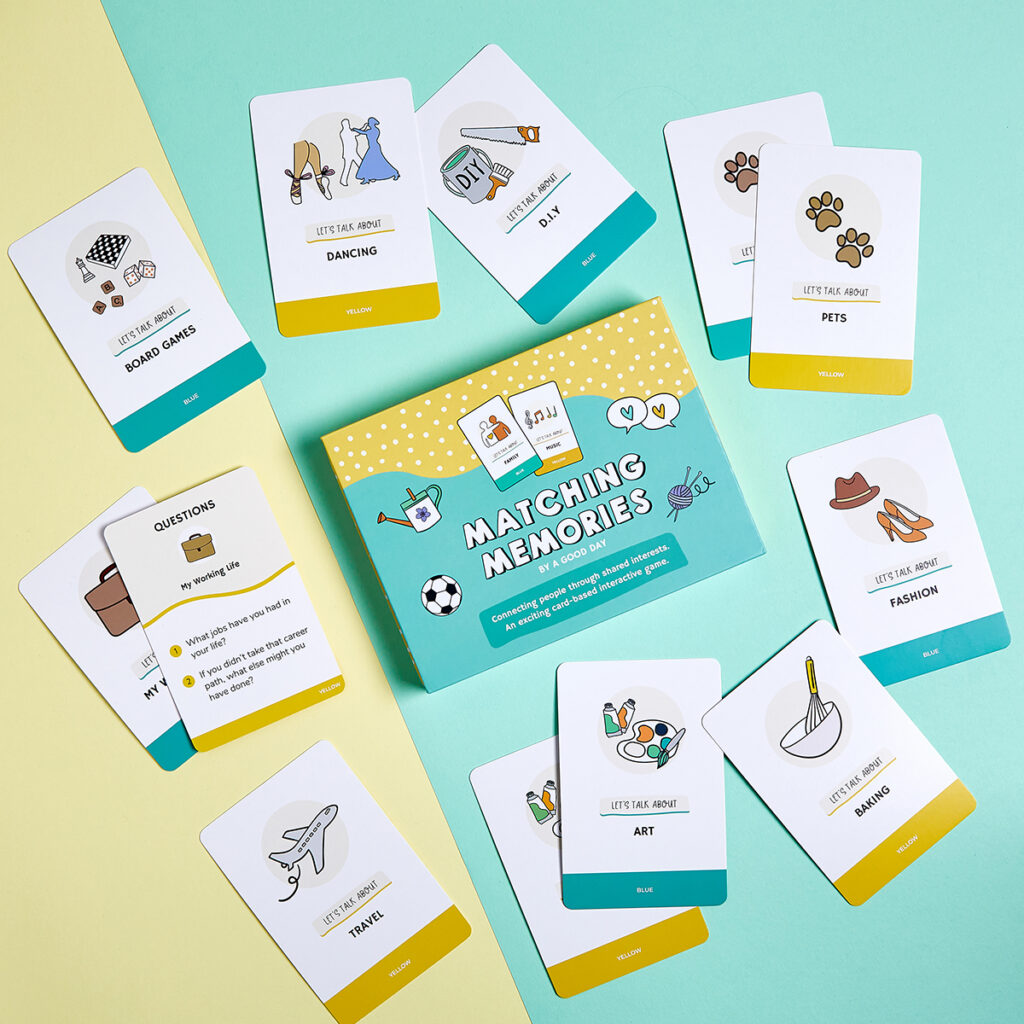
Conversation resources work best when they are invitations rather than tests. A Good Day’s Matching Memories™ Conversation Game is designed to create a shared focus for chatting and remembering together. Use it at a pace that suits the person, skip any prompt that does not feel right and let the discussion go where it naturally goes.
Small moments count: noticing a colour, choosing a song, sharing a smile or hearing a familiar story once more. A good conversation starter creates the space for those moments to happen.
Explore shared activities and games
For more everyday prompts that can create a shared focus, explore A Good Day’s dementia-friendly activities and games. A simple activity can give a conversation room to begin naturally.