A dementia café, sometimes called a memory café, can be a relaxed place to meet people, share a cup of tea and take part in an activity together. The activity does not need to be elaborate. Its role is simply to offer an easy way to arrive, settle in and begin a conversation.
The most useful starting point is to plan for people, not a timetable. Think about what the group might already enjoy, how much choice feels comfortable and whether each activity can be joined at any point. The NHS suggests that people living with dementia can continue with activities they enjoy and highlights social, creative and reminiscence activities, as well as local memory cafés.
A good dementia café activity leaves room for the person, not just the task. It gives people something shared to notice, talk about or do at their own pace.
What kinds of activities happen at dementia cafés?
Dementia cafés differ from place to place. Alzheimer’s Society describes its local cafés as safe and supportive spaces where people can talk, meet others, receive information and keep active. Some groups may include a short talk, while others centre on social time, music, a quiz or a hands-on table activity.
There is no single format that will suit every group. A welcoming session often combines a simple arrival activity with time for refreshments and unhurried conversation. It is also sensible to make it clear that watching, chatting or taking a break are all valid ways to take part.
12 gentle dementia café activity ideas
1. Start with a familiar-object table
Place a small collection of safe, everyday objects on a table, such as recipe cards, gardening gloves, postcards, fabric samples or household utensils. Invite people to pick up anything that catches their eye. Rather than testing memory, use open observations such as, “This feels familiar” or “I wonder what this reminds you of?”
2. Try a picture and postcard conversation table
Photographs of places, seasons, animals, hobbies or everyday scenes give people a shared point of focus. Use clear, uncluttered pictures and offer a few at a time. Someone may want to describe the image, share a story or simply enjoy looking.
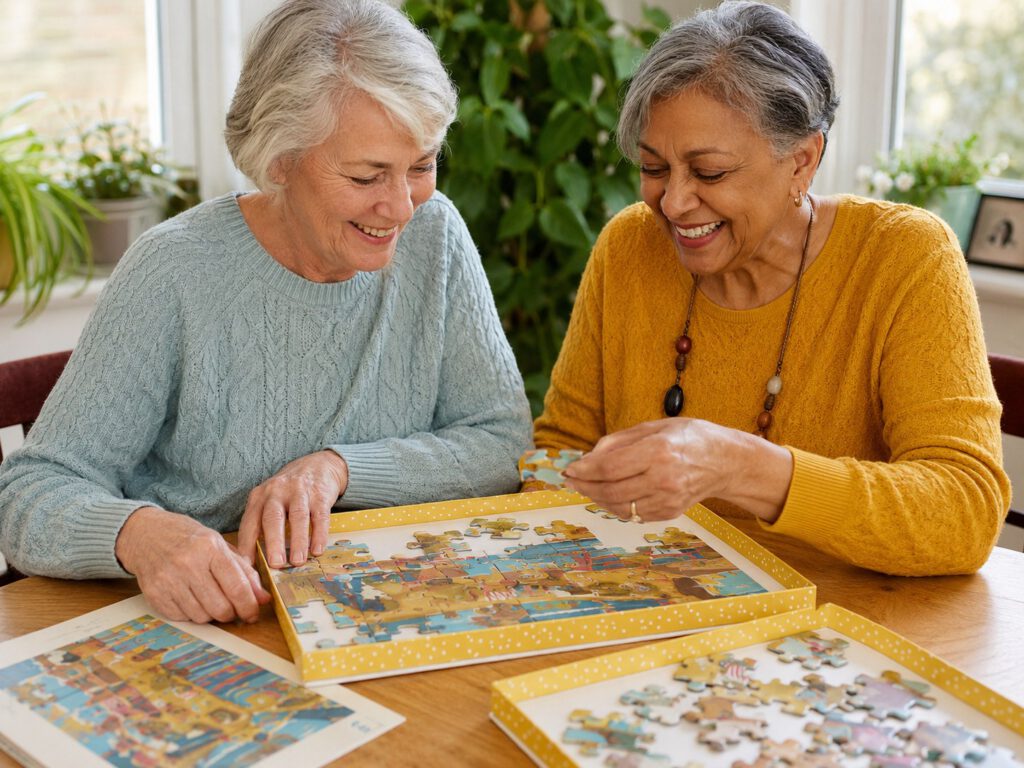
3. Create a shared jigsaw table
A jigsaw can be left out throughout the session so that people can add a piece, watch or work together without needing to commit to a full game. Larger pieces and clear images can make the activity easier to approach. Explore A Good Day’s dementia jigsaw puzzles for options designed around time together.
4. Use a small music moment
Play a familiar song or invite people to choose between two musical styles. A short listening moment can be followed by a simple prompt, such as “What do you notice about this song?” or “Would you like to hear another one like it?” Keep the volume low enough for conversation to remain easy.
5. Offer seasonal conversation cards
Choose a season and use a few prompts around familiar routines: spring flowers, seaside holidays, autumn recipes or winter celebrations. This works well because everyone can join from their own experience. Avoid treating a particular answer as correct.
6. Make a simple community display
Invite people to add a word, drawing, picture or memory to a shared noticeboard. A “things that make us smile” board can grow over several weeks and gives regular visitors something familiar to return to.
7. Host a gentle two-choice quiz
Keep the questions light and make guessing welcome. Questions about everyday preferences, familiar places or pictures are often less pressured than factual recall. For example: “Which would you choose for tea: fruit cake or shortbread?”
8. Share a recipe memory
Bring a simple recipe card, ingredient picture or empty packet as a prompt. Ask about favourite puddings, family meals or the smell of a particular ingredient. You do not need to cook on the day for food memories to make a good conversation.
9. Try a collaborative colouring table
Provide a small number of clear colouring sheets and good-quality pencils. Keep the table inviting but optional. A shared creative table can be especially useful for people who would rather have something to do with their hands while they chat.
10. Use a familiar-word game
Write large, readable words on cards around a gentle theme, such as holidays, gardens or favourite foods. Invite people to choose one and say anything it brings to mind. There is no need to complete a set or keep score.
11. Build in a “show and tell” moment
Invite visitors to bring an object, picture or small item that matters to them, only if they would like to. A host can model the approach by sharing something simple first. The purpose is conversation and connection, not performance.
12. End with a familiar closing ritual
An ending can be as simple as a shared song, a favourite question, or a thank-you round. A predictable close helps make the session feel complete and gives people a gentle cue that it is time to leave.
Planning a session that feels welcoming
It helps to arrive early, set out only the materials you need and keep signs easy to read. Offer seating with a clear route through the room, allow plenty of time for refreshments and keep background noise low where possible. The NHS notes that activities can be social, creative, physical or based on reminiscence and encourages people to continue activities they enjoy.
Choice matters, but too much choice can make a table feel busy. Try presenting two or three options rather than a large selection. If a planned activity does not appeal that day, it is fine to let the conversation take the lead.
How to make activities inclusive
Use language that welcomes both people living with dementia and those who come with them. Avoid asking anyone to prove what they remember or to finish a task. Offer clear invitations, not instructions. A person may participate by sorting, watching, holding an object, listening or chatting.
Pay attention to the group’s energy. Some people may be keen to talk; others may need a quieter corner. Make it easy to step away and return. If you run a dementia café, local dementia support services can also help people find information and support beyond the group itself.
Bringing practical activities into a care or community setting
For groups that run regularly, having a small activity kit can make preparation less demanding. A mix of visual prompts, conversation cards, a collaborative puzzle and an easy creative activity gives hosts choices without requiring a new plan every week. A Good Day’s Care Home Activity Packs are designed for shared activity time in care and community settings.
The most important measure of a successful session is not how many activities are completed. It is whether people have had room to be themselves, share something familiar and enjoy time together.
Explore shared activities and games
For more ideas to put on the table, explore A Good Day’s dementia-friendly activities and games. The category brings together practical shared activities that can be adapted to a group’s interests and pace.