
Arts and crafts are always a good idea, and there’s no better time than spring to get crafting!
With nature in bloom and plenty of colour all around, there’s so much possibility for arts and crafts to boost your mood and add a little mindful time into your day. Crafting is especially beneficial for people with dementia, because it offers gentle stimulation and supports wellbeing.
Why spring crafts work so well as dementia activities
Spring naturally engages the senses:
- Colour – soft pastels, bright florals, fresh greens
- Texture – petals, leaves, soil, paper, fabric
- Scent – flowers, herbs, fresh air
- Familiarity – gardening, seasonal routines, springtime traditions.
These elements are wonderful ways to help spark recognition and open up conversations. Even when memory is affected, it can help to build an emotional connection with your loved one or care home residents.
Plus, nature-based activities can be completely pressure-free. There’s no right or wrong way to arrange flowers or decorate a pot, so they’re idea for reducing frustration and anxiety levels.
So, let’s get into it. Here are our favourite spring craft activities for people living with dementia, with easy adaptations for different abilities and interests – which will you try?
1. Pressed flower art
Gentle and low-energy, this can be done over a few days depending on energy levels.
What you’ll need:
- Flowers or leaves (real or artificial)
- Heavy books (for pressing)
- Card or paper
- Glue
How it works:
Place flowers between pages of a book for a few days to flatten them. Once ready, arrange and stick them onto card to create simple pictures or patterns.
Why it works:
- Encourages slow, mindful engagement
- Offers a sense of accomplishment
- Can spark memories of gardens or favourite flowers
Tip: If waiting for flowers to press isn’t practical, ready-pressed flowers or even printed images work just as well.
2. Decorating plant pots
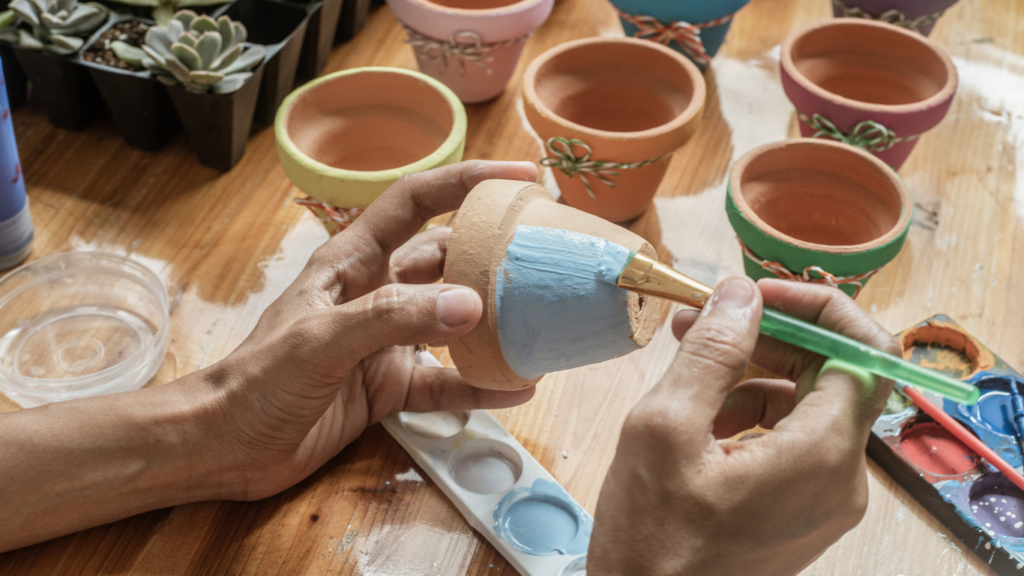
A slightly more hands-on activity that adds colour and purpose.
What you’ll need:
- Small plant pots (terracotta or plastic)
- Paints, stickers, or coloured pens
- Optional: a small plant or seeds
How it works:
Decorate the outside of the pot in any style – you can use patterns, different colours, or simple shapes. You can then plant something in your pot together, like flowers or herbs, or simply keep it as a decorative item.
Why it works:
- Combines creativity with a sense of purpose
- Connects to familiar routines like gardening
- Offers something tangible to keep or gift.
3. Sensory nature collage
Perfect for engaging touch as well as sight.
What you’ll need:
- Cardboard or thick paper
- Natural materials (leaves, twigs, petals)
- Fabric scraps, textured paper, cotton wool
- Glue
How it works:
Arrange and stick different materials onto the card to create a collage. There’s no set design, just allow yourself to explore shapes and textures.
Why it works:
- Encourages sensory exploration
- Supports fine motor skills
- Can be adapted for different abilities.
4. Flower arranging

A classic for a good reason. It’s simple, familiar, and soothing.
What you’ll need:
- A small vase or container
- Flowers (real or artificial)
How it works:
Arrange flowers however you like – make it as simple or as detailed as you prefer.
Why it works:
- Familiar and often linked to positive memories
- No pressure for perfection
- Creates an immediate, visible result to enjoy for days, even weeks.
5. Spring-themed colouring or painting
A flexible option that can be easily adapted.
What you’ll need:
- Colouring sheets or books (featuring flowers, gardens, or birds)
- Paints, crayons, or pencils
How it works:
Colour or paint at your own pace. Some people may prefer guided images or colouring sheets, while others may like to try out free painting.
Why it works:
- Encourages creativity without overwhelm
- Can be calming and repetitive
- Great for fine motor skills.
6. Springtime wreath making
A lovely way to bring together lots of different textures, colours, and natural materials into one simple activity.
What you’ll need:
- A ready-made wreath base (foam, wire, or even a cardboard ring)
- Artificial flowers, leaves, or soft greenery
- Ribbon, fabric strips, or wool
- Glue, tape, or clips (depending on ability level).
How it works:
Start with the base and gradually add decorative elements. This can be as structured or as free-flowing as you like – placing, wrapping, or sticking materials around the ring to build up colour and texture.
Some people may enjoy following a pattern, while others will prefer a more relaxed approach.
Why it works:
- Repetitive, gentle movements can feel calming
- Combines colour, texture, and creativity in one place
- Offers a clear, satisfying end result
- Can be displayed on a door or wall, creating a sense of pride and continuity
Tip: Pre-cut materials or loosely attach items beforehand if dexterity is limited to make the activity more achievable and less frustrating.
Keeping activities enjoyable
As always, when it comes to supporting dementia patients, the most important thing is the experience, not the outcome.
So, always remember to keep instructions simple and follow their lead, taking a break or stopping if they feel overwhelmed or aren’t in the mood that day.
Focus on the senses – what does it feel or smell like? And allow plenty of time for the activity to avoid stress or anxiety.
Don’t forget to bookmark this page if you’re a caregiver or family member who has a loved one with dementia – and check out our other dementia-friendly games and activities, including seasonal jigsaws, colouring, and Matching Memories conversation game.